 En
 Fr

John D, a septuagenarian living in a luxury hotel on the French Riviera, is intrigued by his neighbor, who reminds him of the wildest days of the Riviera in the 1960s. At that time, he was a spy in a world full of promises. One day, his neighbor mysteriously disappears... and John finds himself facing his demons : are his former adversaries back to put his idyllic world into Chaos ?
What makes this film special for you ?
Manu Dacosse : First of all, working with Hélène and Bruno means you’re guaranteed to work with Super 16. It also means shooting in lots of sunshine. It’s a real pleasure, of course !
For Reflection in a Dead Diamond, we used the cities of Menton, Ventimiglia, and Genoa as our backdrop... All the exteriors were shot in this bright light, which I find so well suited to film. The high contrasts suddenly take on a very different dimension from digital, especially in the brightest parts of the image.
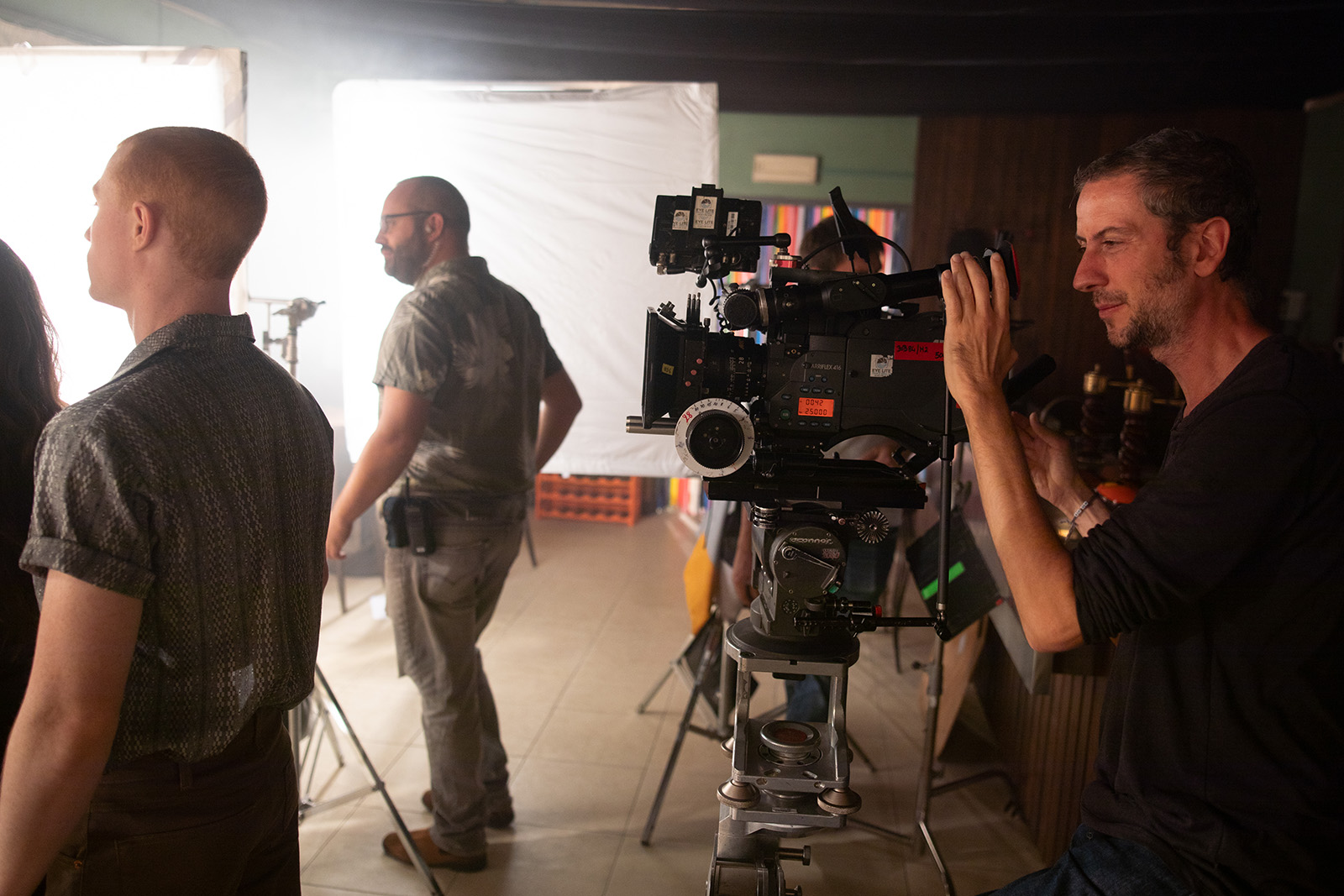
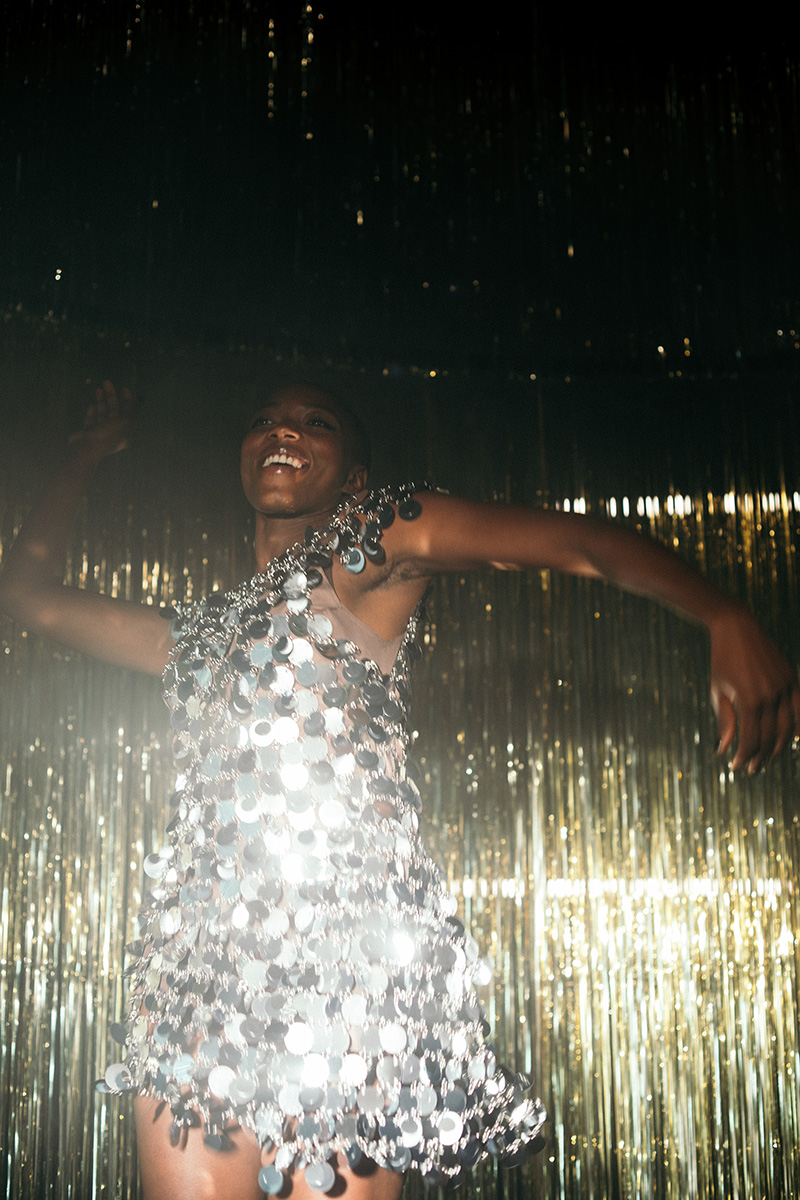
The colors also look a hundred times better, not to mention the visual identity of Super 16, which is so different from what is done now with large sensor or full-frame digital cameras... Finally, the title refers to reflections and diamonds... And that’s not insignificant in the images. It was exciting for me to deal with all these sparkles, these flashes of light on the costumes, the sets, and the props.
Do you have a special relationship with them ?
MD : It’s like a little family. We’ve all known each other for over twenty years, and working with such complicity is priceless. We feel completely at ease with each other, and from shooting to editing, it’s always an opportunity to go further. That doesn’t stop me from making mistakes, but I know they’ll tell me, and that in the end it will be good for the film. One funny thing about their working method, for example, is the storyboard. Every shot is drawn out in detail, but a bit haphazardly ! It’s often downright ugly ! But it doesn’t matter, the idea behind the shot is there. This kind of bible allows us to move forward very quickly together. First, we spend three weeks working the schedule, then each day we shoot 30 to 40 shots !
Is the order of production important ?
MD : We do it as quickly and logically as possible. There’s no respect for chronology, but as is often the case, we group each shot by lighting setup. On this film, we had 40 days of shooting, which is more comfortable than the previous films, with a starting budget of €3.5 million. But their cinema is also deeply rooted in editing. Lots of shots, lots of ideas, lots of technical challenges too, on the scale of each scene, sometimes each shot.
It’s a spy movie, very Bond-esque in essence...
MD : The world of James Bond is indeed at the heart of the project. But don’t expect Hélène and Bruno to deliver an authentic James Bond story ! The film is full of spies and different kinds of superheroes, inspired by Italian comic books from the 1960s and 70s. At the top of the list is “Diabolik” (created by the Giussani sisters), one of the most popular "fumetti", adapted for the cinema in 1968 by Dino De Laurentiis (and directed by Mario Bava). My mission was often to leave these mysterious characters in black, almost as silhouettes. And to work hard on the brightness and textures...
And then the distinctive feature of this new film is the much greater number of special effects and tricks compared to the previous ones. Although our initial approach was to use mainly transparency techniques, some shots also had to be produced on a green screen to make it work.
How did you film the interiors ?
MD : For all the interiors, especially all the sequences that required composite shots, we filmed at Film Land studios in Luxembourg. As Hélène and Bruno wanted to do as much as possible live, we had to produce all the necessary plates before filming. And you don’t realize how much time that can take. First the shooting, then the selection and editing, and finally the color grading... It almost feels like shooting a short film before the feature ! Despite serious preparation, we even found ourselves a little behind schedule in getting all these elements ready in time.
Was this pre-shooting also done on film ?
MD : No, that would have been too complicated ! I shot everything with my little Blackmagic Pocket. And for the retro projections of still images (which punctuate certain scenes, in a very comic book style), I simply used my Canon 5D Mark IV, which I find perfect for that. But I remember there was a lot to do in the script before we could even start shooting the film itself. For example, there’s a whole scene in a movie theater, with a character who sets off a bomb and runs away into space... These were real scenes to shoot, not just landscape shots rolling by ! And on top of that, they had to be in the style of 1970s spy movies.
It’s also a very contrasty film, with a deliberate choice of harsh lighting.
MD : The more time passes, the more I get bored of universal use of soft lighting on sets brought by digital technology and the rise of LEDs. The opportunity to work on film, as with this movie, allows me to return to more specific light sources, with more punch and also more precision. I also find myself returning to tungsten spotlights, such as Par 64, which I used a lot on this film, even lighting certain scenes only with those. I’m thinking of a specific scene against a black background where the characters move from shadow to light in very specific areas.

In addition to that, Hélène and Bruno really like static shots, that helps a lot in working with sharp light the old-fashioned way... Far away from the 360° soft lighting that some directors have been using for years. And they’re both very keen on effects and finding new things to do with the image. For example, I remember a roulette scene in the casino where they wanted lots of tiny points of light, with the narrowest possible beams. We finally shot the scene with Maglite torches, which have an extraordinarily sharp and precise beam. It’s a bit like lighting with battery-powered tiny follow spots.
And the exteriors ?
MD : Blue skies on exterior days is something we can’t compromise on with Hélène and Bruno. As long as we’re shooting in full sunlight, everything’s fine... But if that’s not the case on a given day, everything becomes much more complicated on camera. That happened on one or two days, and since we couldn’t afford to wait, we had to work around it in post-production. With the help of the special effects team, we managed to use mattes and layers of overlays to restore the blue sky and make the continuity work.

Can you describe the rear projection equipment you used ?
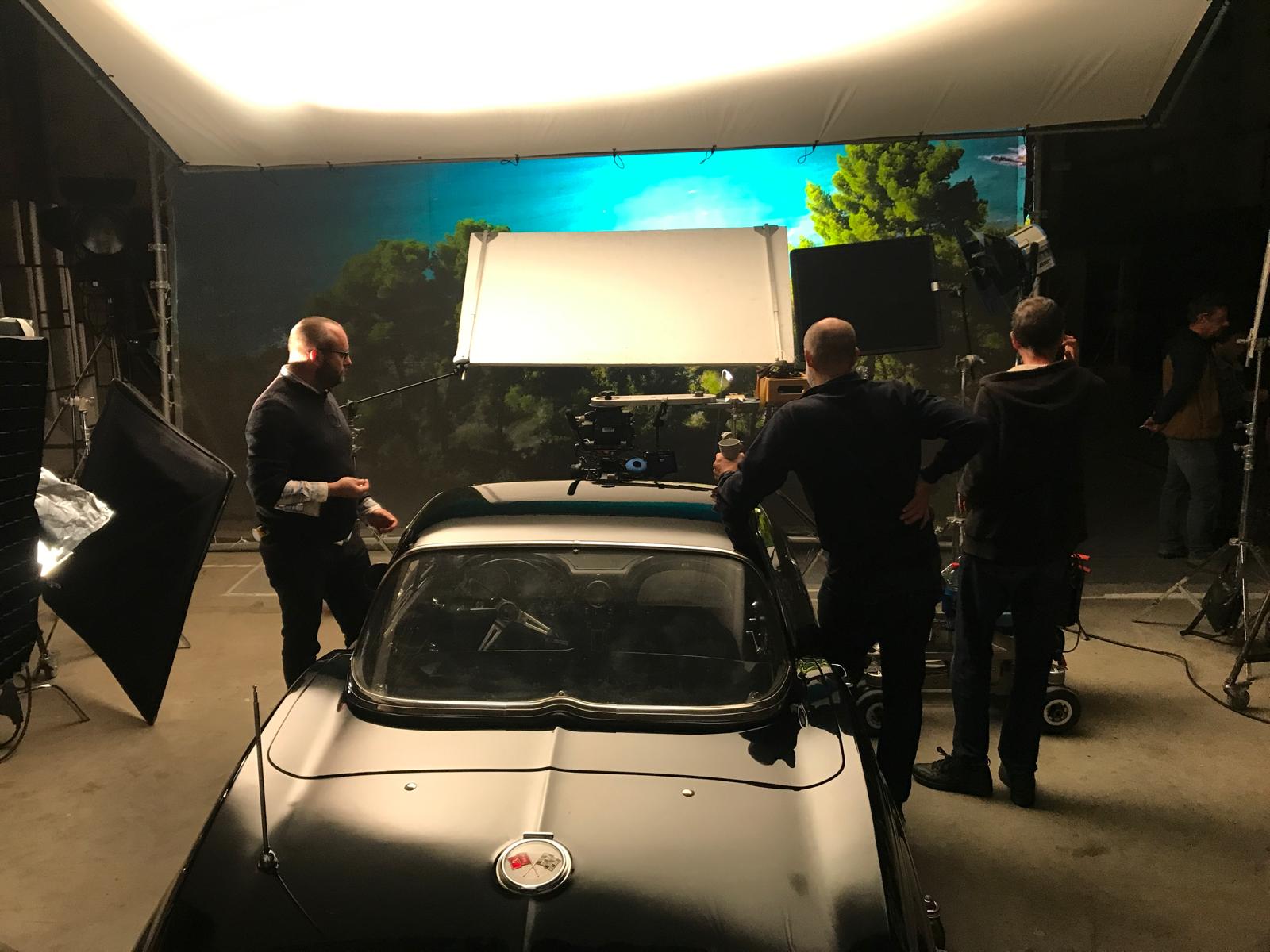
MD : We first spent a day on stage doing tests to validate the setup. The first step was to find the right fabric for the screen. This isn’t easy because you have to choose the best compromise between a thick fabric that provides fairly even light distribution and a thinner, brighter fabric that tends to create vignetting on the projected images. Since then, I’ve had the opportunity to use this technique again on a subsequent film, and I’ve refined my research by finding the gray Lucido from Showtex, which works very well for me. Next, you have to find the right projector model (a Panasonic PTR Z970E, with a light output of 10,000 lumens), which we rented from Apex in Luxembourg. Alexandra Brixy supervised the installation of the projector and screen for me. The scenes were then filmed on Kodak 500T, at around T4, adjusting to the light level of the peelings. In terms of lenses, I naturally used the sharpest lenses on the market, Ultra Prime lenses on an Arri 416, as I desperately needed definition (the film was shot in 2.39 in Super 16). The 16 Scope option was not an option with Hélène and Bruno because they are fans of cropping during editing, and it would not have been possible with anamorphic lenses.
There was a lot of talk about AI in January, and an international summit was held a few weeks ago in Paris. What are your thoughts on this coming revolution ?
MD : Two years ago, Greig Fraser explained in an interview that some shots in The Batman had been generated entirely using 3D modeling. So we’re not far off from AI-made cinema. And if you think about it, AI is just a way to move faster in that direction... In any case, there will always be someone behind the machine asking it to generate a particular shot.
So I think films will continue to be made, but perhaps the job of director of photography will evolve into a kind of visual supervisor, validating what has been generated. A bit like some of my colleagues already do on big animated films... It’s certain that this will disrupt the movie business, because the film industry is absolutely not ready for it... I think for now, productions don’t really realize the possibilities of the tool, but when they’ll do, things will really change radically. In fact, as someone who teaches in schools, I encourage students to work with these new tools. Many are already doing quite well using the Capcut platform, and I don’t see how we could discourage them... After all, it’s probably their future ! And you can never go against technology. Well, there are still films like the ones I make with Hélène and Bruno, where we’ll chase tones of natural locations on the Mediterranean coast, in a very concrete reality. That’s how I got into this business, and if I see it changing radically, I don’t know if I’ll enjoy it as much... It also reminds me of my early years learning about images, particularly photography. It was a passion that allowed me to travel and meet people. If someone told me now, at the age of 20, that I was going to start taking photos—even very creative ones—exclusively on a computer, I think I would change careers immediately ! Or, at the very least, I would move into documentary filmmaking...
(Interview conducted by François Reumont, for the AFC)


