 En
 Fr
Pauline Doméjean talks about her work on “No Skate !”, a short film by Guil Sela

Paris, 2024 Olympic Games. Isaac is a sandwich board man. Cléo is a sandwich board woman. One day, Isaac sees Cléo throw a skateboard into the water.
This is our second collaboration with Guil Sela. We made a short film together, Santa Maria Kyoko, shot in Corsica in 2023 and co-directed by Félix Loizillon. Guil likes to work in small teams and writes his scripts with the logistics of the shoot in mind.
As with our previous collaboration, I knew I would be accompanied by a single camera asssistant, who would also help me with the equipment and lighting. I asked Louis Sciara, with whom I had already worked on Guil’s previous film, to accompany me. We shared a love of cinema, and Guil had already told me about his tastes and desires in film.
For this film, unlike the previous one, he wanted to try a freer camera style, so that we could be guided by the performances of Michaël Zindel and Raïka Hazanavicius. He also wanted to try a handheld camera, which he had never done before in his films.
The main references were the early films of the Safdie brothers, in terms of the characters’ relationship to the city, the camera’s relationship to the characters, the movement, and the rhythm.
We knew we wanted to shoot almost exclusively with long focal lengths, even very long focal lengths. So we went location scouting to find settings that would allow us to see the actors and actresses from a great distance and follow their movements. For each shot, we determined the exact location of the camera together. For the very long focal length shots in which I had to follow the characters by panning, I decided to stand up, as the panning movements were already energetic enough. As soon as the focal length seemed short enough and I didn’t have to follow any movements, I switched to shoulder shots, even for static shots, to give them a sense of liveliness.
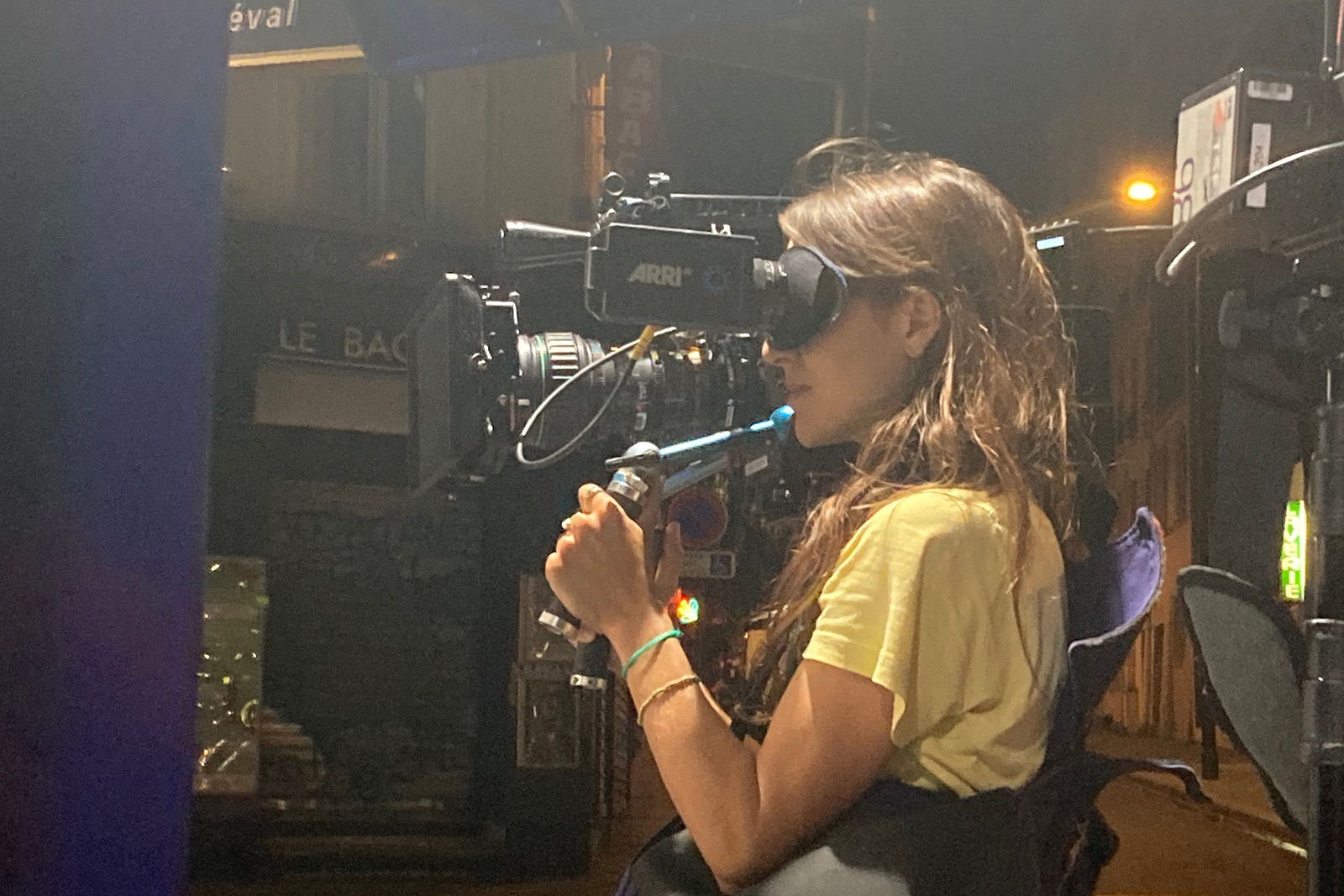
The main challenge in the shot list was to find ways to keep things fresh throughout the film while filming these wanderings and long dialogues in motion, all while staying on a tripod or fixed shoulder with pans. We made it a rule that there should always be some form of life or movement, whether in the pans, the shoulder-mounted camera, or the zooms.
Guil had already made two films in 16mm, so he wanted us to capture the same dynamic feel, texture, color rendering, and great depth of field. Shooting in 16mm wasn’t an option given the budget and the desire to do long, improvised takes.
We did some tests at TSF with the Alexa 35 and the Alexa Mini. We tried the Super 16 sensor modes on both cameras and did some exposure tests during the day with the diaphragm very closed and in very low light. The Alexa 35 gave us much more flexibility given its dual ISO sensitivity.
Since much of the film was shot at night with no possibility of lighting, it was essential to start with a sensitive camera that didn’t create too much digital noise in low light. And since we were only using part of the sensor with Super 16 mode, I was concerned about noise. So we determined an ISO not to exceed in low light.
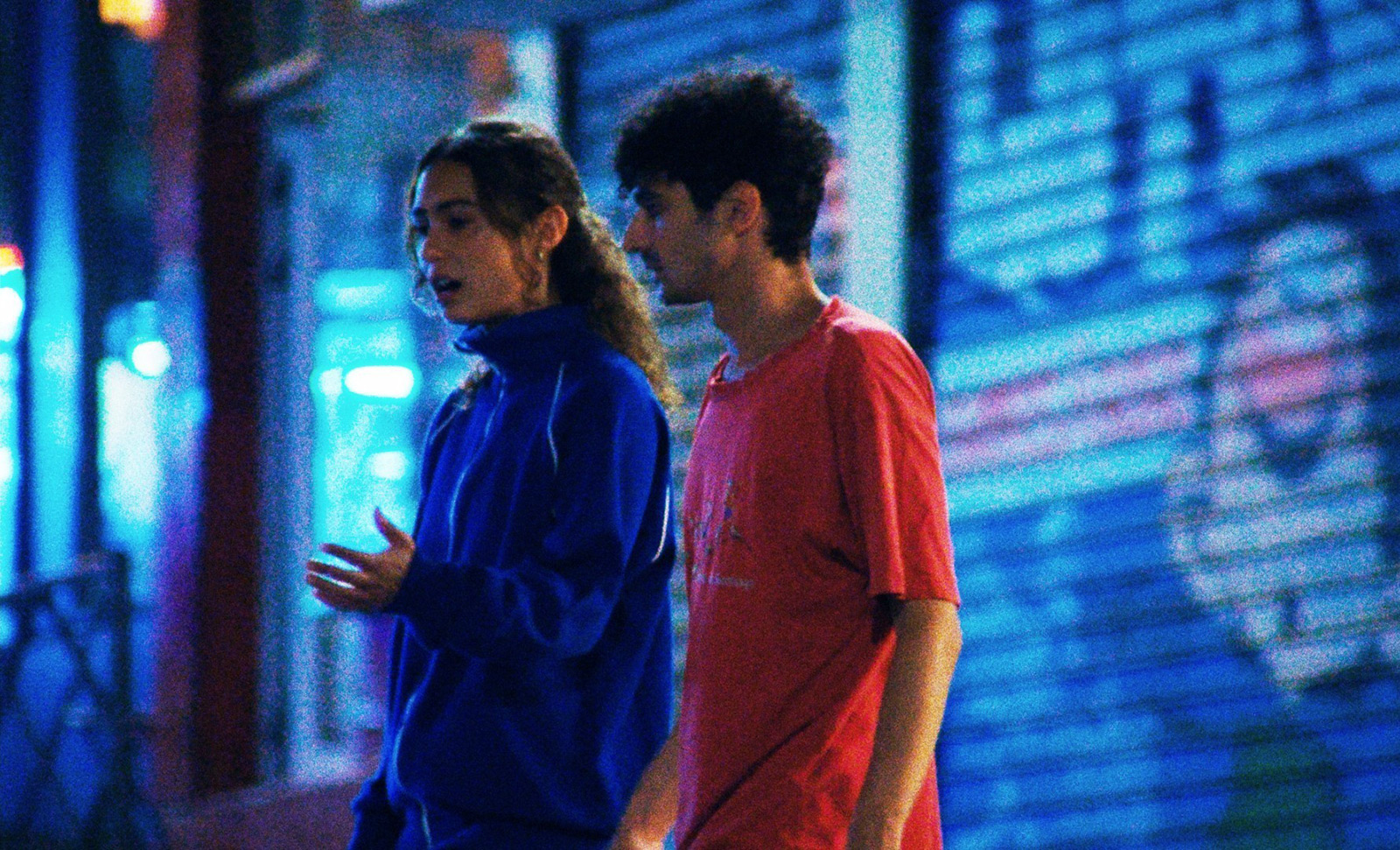
I shot all the daytime sequences at ISO 1600 (in ISO 800 sensitivity mode) and at f/22 or f/16, in order to get as much depth of field as possible (which went hand in hand with shooting with the sensor in S16). At night, I stayed at ISO 1600 but with the sensitivity set to ISO 3200, and I opened the aperture as little as possible. The nice surprise was the star-shaped bokeh caused by closing the aperture. You can see it clearly in a scene with reflections in the water and in the final sequence in the car headlights.
The tests also allowed us to create LUTs for the shoot with colorist Elie Akoka. We then continued in this direction with the film’s colorist, Emmanuel Fraisse. We were looking for a lot of contrast and density in the colors. I underexposed the entire film slightly in order to bring out the colors in the skin, the sky, and the costumes.
We shot the entire film with a Canon 11.5-165mm Super 16 zoom lens, sometimes with a focal multiplier attached. I really like its chromatic aberrations and softness. For the night exterior sequences, we needed a zoom lens with a nice aperture.

I used very little lighting during the shoot, except for the night sequence at Cléo’s house. We chose the locations for their lighting and shot at times when the sun was in the right position.
As he was often very far from the scene with the camera, Guil chose to stay with the actors and actresses and the sound. He had a monitor with him, but sometimes we were too far away, so we sent him photos of the frame and communicated by walkie-talkie. He listened to the takes again but didn’t necessarily watch them unless I had any doubts and wanted him to see them again. I had a monitor and framed the shots around the acting. At the end of each take, we would consult with Lucas Doméjean, the sound engineer, and Guil. There was no script on set.
We wanted to film Paris in August during the Olympic Games without going to the venues. We were interested in the impact on the daily life of the neighborhoods we know.
In the end, it turned out that everyday life wasn’t that disrupted. The Olympics are only present in the film through a few posters and infrastructure. At the end of the film, you see fireworks in the distance. We finished filming on the last day of the Olympics, so you can imagine that those are the evening fireworks, and the characters have their backs turned to them. In short, the Olympics are there, but we don’t look at them ; that’s not what the film is about.

Guil wanted to film the neighborhoods of Paris that were familiar to us and reveal the romanticism that could emanate from these daily strolls. We did a lot of location scouting to find the right settings for each scene and the right light. We didn’t want to overdo it, so sometimes we found ways to take the opposite approach.
For example, we enjoyed filming at the top of Belleville Park, where there is a beautiful view of Paris, and not filming the characters looking at the view. We left them with their backs to the landscape and the fireworks, in a dark place where they weren’t lit by streetlights, so their faces disappeared into the shadows.


